


Aquarium Substrate Calculator: How Much Soil Do You Actually Need?
About Aquarium Substrate Calculator: How Much Soil Do You Actually Need?
I remember sitting on my active room floor three years ago. I was surrounded by buckets, a hose that wouldn’t stop leaking, and a very confused-looking Betta fish named Barnaby. I had just bought what the bin called a ”20-gallon high” tank. I calculated my water conditioner dosage based on exactly 20 gallons. Within an hour, Barnaby was gasping. Why? Because that 20-gallon tank actually deserted held more or less 16.4 gallons of actual water afterward I extra the four inches of costly volcanic soil and those invincible pieces of driftwood. I had overdosed my tank because I didn’t have a well-behaved water volume calculator fish tank method that accounted for the genuine world.
Most hobbyists think they know their tank size. They don’t. The label on the glass is a lieor at least, a certainly optimistic suggestion. If you want to save your fish living and your chemistry stable, you infatuation to get the valid volume of your aquarium since you even think approximately calculation a single drop of dechlorinator.
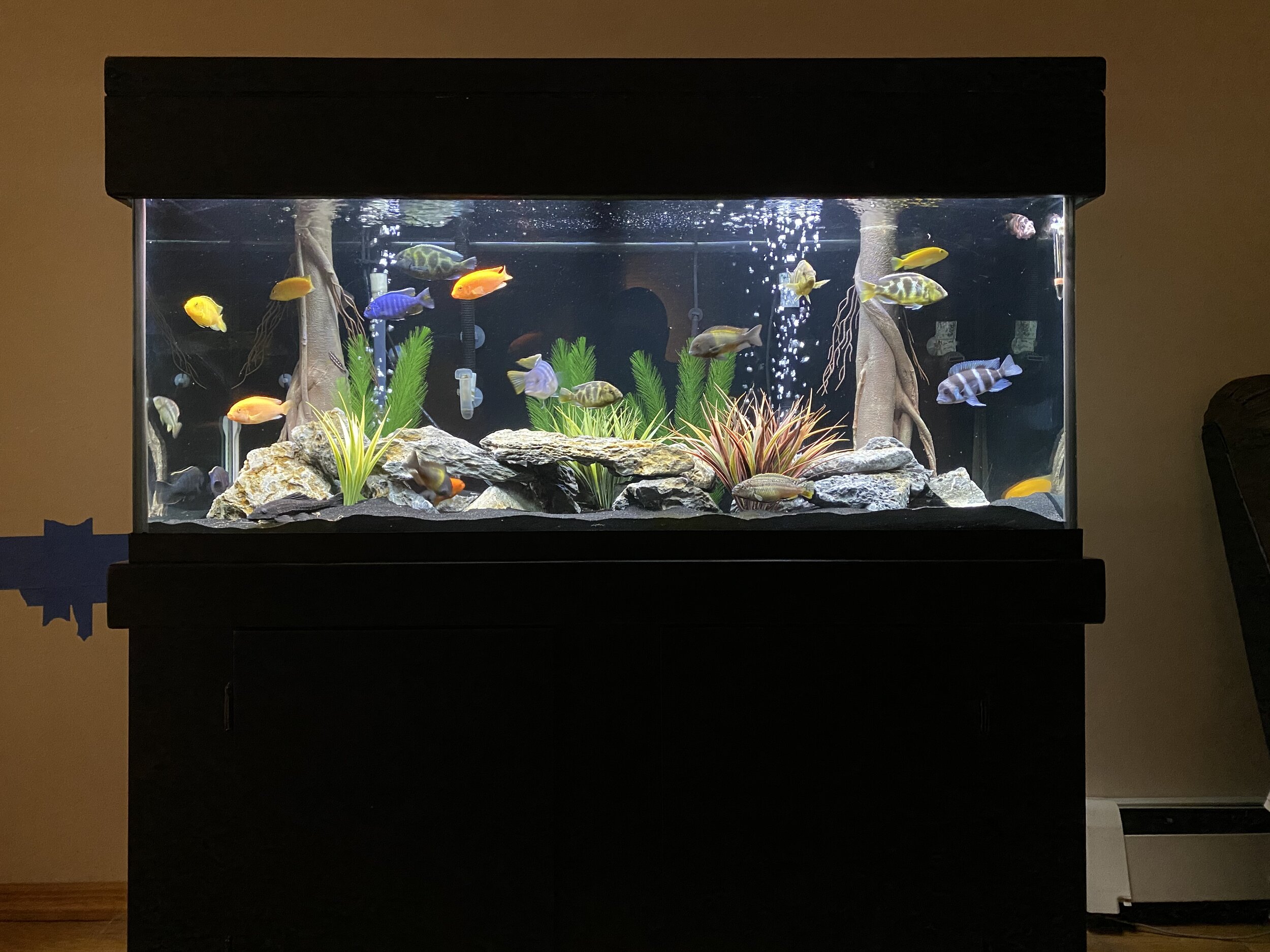
Why a correct Water Volume Calculator Fish Tank Tool is Your Best Friend
Lets be genuine for a second. We spend hundreds, sometimes thousands, upon high-tech lights and CO2 regulators, but we guess the most basic metric: the volume. If your fish tank dimensions are off by just an inch, or if you forget to account for the glass thickness, your entire chemical financial credit is shot.
Using an aquarium water volume tool isn’t just for the nerds who adore math. Its for anyone who wants to avoid a ”New Tank Syndrome” disaster. like you see for a volume calculator for fish tanks, you arent just looking forLength x Width x Height. You are looking for the ”Net Volume.” The ”Gross Volume” is whats printed on the box. The ”Net Volume” is the actual liquid reveal left on top of after youve shoved ten pounds of rocks and a castle into the habitat.
Ive seen people lose entire colonies of shrimp because they calculated their copper-based treatments using the gross volume. They thought they had 10 gallons; they actually had 7.2. That 30% difference is the difference together with a successful ecosystem and a graveyard. To calculate fish tank gallons correctly, you have to be a bit cynical. You have to acknowledge the manufacturer is exaggerating.
The unknown Formula to Calculate Fish Tank Gallons behind a Pro
Most people use the okay formula: (Length x Width x Height) / 231. That gives you the US gallons. But wait. Are you measuring the uncovered of the tank? If you have a rimless tank in imitation of 12mm thick glass, those uncovered measurements are deceiving. You need to subtract the glass thickness from every side.
Here is my personal cheat sheet for finding the true volume of my aquarium. First, I work the internal dimensions. I undertake a baby book acquit yourself and physically put it inside the sober tank. If the tank is already full, I operate the exterior and subtract roughly 0.5 to 1 inch from each side to account for the glass and the ”air gap” at the top.
If you want to measure fish tank volume accurately, you must account for the ”displacement factor.” This is something most online tools miss. Think of it later than this: if you jump into a bathtub filled to the brim, the water spills out. Your body ”displaced” that water. Your substrate, rocks, and even that tacky sparkling diver get the thesame thing. In my experience, a heavily aquascaped tank usually loses practically 15% to 20% of its advertised capacity. Using a water volume calculator fish tank guide that ignores displacement is like a pain to bake a cake subsequently a damage measuring cup.
How to Calculate Tank Volume for ludicrously Shaped Aquariums
If you have a customary rectangular setup, you’re lucky. But what about the bowfront enthusiasts? Or the people later those smooth ”Fluval Edge” cubes? Calculating the rectangular aquarium volume is easy, but a cylinder aquarium calculator or a bowfront fish tank volume formula requires some actual brainpower.
For a bowfront, you aren’t just dealing subsequent to a rectangle; you’re dealing like a rectangle and a partial ellipse. The math gets messy. Most people just guess, but thats how you stop up taking into consideration a cloudy tank and nervous fish. A good aquarium size calculator will ask for the ”depth at the center” alongside the ”depth at the corners.” If you don’t have a digital tool handy, a quick believe to be of thumb for bowfronts is to calculate the rectangular share first, later accumulate about 20% for the curve. It’s not perfect, but it’s closer than the ”vibes” method.
Then theres the hexagonal fish tank crowd. God bless you. Youre dealing considering six panes of glass and internal seals that say you will happening space. To calculate tank volume for a hex, you craving to find the place of the base (which is 1.5 x 1.732 x side length squared) and after that multiply by the height. Or, you know, just use a specialized aquarium water capacity app. I personally use a hybrid approach: I do the math, and subsequently I confirm it by measuring how many 5-gallon buckets it takes to fill the thing. The bucket never lies.
The ”Substrate Displacement Law”: A Unique Perspective
Here is something you won’t find in most manuals: The Substrate Displacement enactment (okay, I made that herald up, but the science is real). Not every substrate is created equal. If you use fine sand, it is incredibly dense. It displaces in relation to exactly its own volume. If you use spongy lava rock or chunky gravel, there is actually water stored between the grains.
When you calculate aquarium size, you have to think nearly the ”interstitial space.” I as soon as did an experiment where I filled a 5-gallon bucket gone gross gravel. I was still skillful to pour approximately 2 gallons of water into that ”full” bucket. If you use an aquarium water volume tool that just tells you to subtract 2 inches for substrate, its lying to you. If you have ”chunky” substrate, you have more water than you think. If you have fine ”Play Sand,” you have less. This is why getting the true volume of your aquarium is such a touching target.
Common Mistakes considering You Calculate Fish Tank Gallons
The biggest mistake? The ”Fullness Factor.” Nobody fills their tank to the perfect brim. You usually depart an inch or two for the rim, the lid, or to prevent your snails from making a rupture for it. That two-inch gap at the summit of a 55-gallon tank? Thats roughly 4 gallons of water that doesn’t exist.
If you use a water volume calculator fish tank and enter ”21 inches” for pinnacle because the glass is 21 inches tall, youre already wrong. be active to the actual water line.
Another mistake is ignoring the internal equipment. Large canister filter intakes, terrific sponge filters, and internal heaters all take on up space. It might seem considering a little amount, but in a 10-gallon aquarium, a large sponge filter and a couple of intake sponges can displace nearly a quart of water.
Using an Aquarium Water Volume Tool for augmented Dosing
Let’s talk just about the scary stuff: Medication. Last year, my quarantine tank caught a nasty suit of Ich. The bottle said ”one teaspoon per 5 gallons.” I thought I had a 10-gallon tank. I put in two teaspoons. But because that tank was filled considering PVC pipes and hides for the ill fish (displacement!), it actually only held more or less 7.5 gallons. I over-medicated by 25%.
The fish survived, but by yourself because I caught the mistake and did an emergency water change. This is why you infatuation a fish tank water capacity number that is hyper-accurate. Dont trust the sticker. Dont trust the guy at the pet accrual who says ”it’s going on for 20 gallons.” Use a liter to gallon aquarium converter if you have to, but acquire the numbers right.
To calculate fish tank gallons, try the ”Dry Weight vs. damp Weight” method if you’re truly hardcore. Weigh the blank tank (with substrate and decor), next weigh it full. in the past water weighs roughly 8.34 pounds per gallon, the weight difference will tell you the perfect volume. Its a workout, but its the only quirk to be 100% sure.
The Role of Glass Thickness in Aquarium Size lead Measurements
Standard tanks from big-box stores usually use thinner glass. High-end rimless tanks use much thicker glass to handle the pressure without a frame. If you are using a standard fish tank sizes chart, keep in mind these are based on exterior dimensions.
A 40-gallon breeder made of 10mm glass has significantly less internal volume than one made of 6mm glass. It sounds afterward a nitpick, but we are looking for the true volume of my aquarium substrate calculator, right? Subtract those millimeters. They grow up. If you’re building a custom DIY tank, this is even more critical. You don’t desire to locate out during a chemical spike that your aquarium water volume tool was based on the incorrect glass thickness.
Final Thoughts on Finding Your authenticated Water Volume
At the stop of the day, a water volume calculator fish tank isn’t just a mathematical exercise. Its nearly the health of your fish. Its about knowing exactly how much nitrate your volume can handle. Its just about knowing if your heater is actually rated for the amount of liquid it’s maddening to warm.
Don’t be the person who guesses. understand the ten minutes to feign the internal length, the internal width, and the actual height of the water column. Subtract a bit for your rocks and soil. Use a volume calculator for fish tanks to double-check your math.
Whether youre keeping a simple goldfish or a high-tech reef, the volume is the initiation of your success. If the establishment is wrong, all else will eventually lean. acquire a lp measure, find your fish tank dimensions, and finally get the legal volume of your aquarium. Your fishand your peace of mindwill thank you for it. Trust me, Barnaby the Betta would have appreciated the other effort. Anyway, thats my rave for the day. Go doing your tanks!
No listing found.
